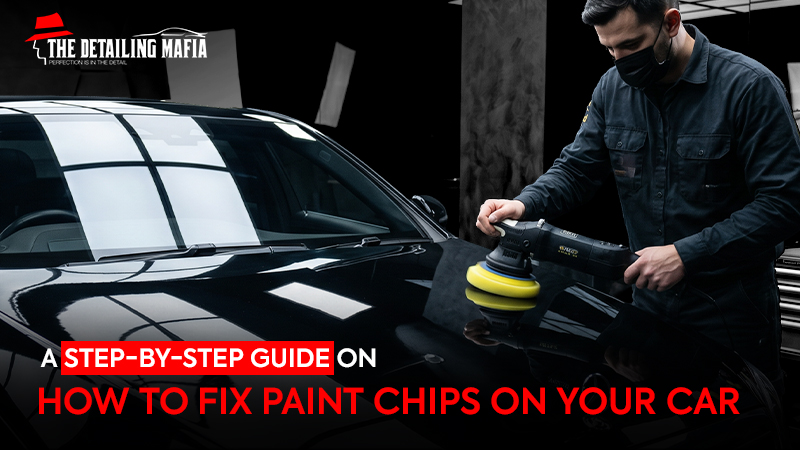
Best Ways to Fix Chipped Car Paint | The Detailing Mafia
Some things are more irritating for car owners to search for how to fix paint chips on your car on their vehicle. Whether it is loose gravel, a rogue shopping cart, or a door that dings in a tight parking lot, paint chips are not just cosmetic defects; they can lead to rust, corrosion, and affect the resale value. Fortunately, there are many reliable techniques for fixing paint chips on your car, including simple DIY methods and advanced professional repair strategies.
In this car paint chip repair guide we will run you through what you need to know about how to fix paint chips on your car and how to identify the severity of the chip, to use the right tools and products for each type of fixing.
Why is it Significant to Fix the Paint Chips
Let's understand why it is so vital to know how to fix paint chips on your car immediately:
Prevent rust from car paint chips: The exposed metal can rust during the day, especially in moist or coastal areas.
Protect the resale price: Even weak paint can reduce the market value of your car.
Maintain beauty appeal: Chips and blemishes can make your car look aged and neglected.
Avoid major repair: A small chip can spread quickly, which can later lead to peeling, cracking, and further raise the need for expensive bodywork.
Types of Paint Chips on a Car
Understanding the type of paint chips helps determine how to fix paint chips on your car.
-
Surface chips: Only where the transparent coatings get damaged, and the paint remains intact.
- Mid-level chips: The paint is damaged, but the primer still covers the metal.
- Deep chips: Metal is exposed, and both paint and primer are chipped away.
Materials and Tools that You Will Require
Despite the method, some regular equipment and materials are used here in the process of how to fix paint chips on your car:
-
Touch-up paint (matches the exact colour code of your vehicle)
- Fine-grit sandpaper (e.g., 2000-grit)
- Clear code pen or applicator
- The motor vehicle's primer
- Rubbing alcohol and wax remover
- Microfiber cloths
- Painting chip repair kit
- Toothpicks or fine brushes
- masking tape
- Polishing compound
- Option: Paint-bending pen or spray
How to Fix Paint Chips on Your Car
Here are different methods on how you can fix the paint chips on your car.
Technology 1: DIY Paint Chip Repair Method
This is the most common and cost-effective method of how to fix paint chips on your car for less to moderate chips. Ideal for surface-level and intermediate-level chips.
Step-by-step guide
Below, you will see the proper guidance on doing DIY paint touch-ups.
1. Clean the area
Start by washing the area thoroughly with car shampoo. Then wipe it with rubbing alcohol or wax remover to eliminate oil, dirt, and wax.
2. Sanders sand (if necessary)
Sand lightly around the chipped area using a 2000-grit sandpaper to smooth out jagged edges.
3. Use primer (for deep chips)
If the metal is exposed, press a thin layer of car primer using a good brush or toothpick. Let it dry properly.
4. Use touch-up paint
Car touch-up paint techniques use an applicator that comes up with your touch-up paint or a toothpick, and properly apply a thin paint layer. Let each layer dry before applying the next. Do not overfill the chip.
5. Let it recover
Allow the paint to dry for 24-48 hours, depending on the product instructions.
6. Apply a clear coating
When the colour dries, apply a clear coating to seal and safeguard the repair.
7. Polish surface
After complete treatment (usually 3-5 days), use a polishing compound to smooth unevenness and restore shine.
Advantages:
-
Cheap
- This can be done at home.
- Good for small chips
Disadvantages:
-
It may not be thoroughly mixed.
- time-consuming
- A stable hand requires
Technology 2: Use the Paint Chip Repair Kit
Paint Chip Repair Kit (e.g., Dr Colorchip, Turtle Wax Scratch Repair, or 3M Kits) is designed for users who want more comfortable fixes with all tools in the way of how to fix paint chips on your car.
What's in the kit?
-
OEM matched paint
- Sealant or conclusion solution
- Brush or searching
- Instruction
How it works
-
Clean and prep the area
- Apply the paint using the kit's method.
- Mix using the given solution
- Wipes off the excess
- Use sealant
These sets are known for blending better with factory paint and lessening the appearance of "blob".
Pros:
-
Easy to use
- Mixes better than a basic touch-up
- Available in many OEM shades
Cons:
-
A little expensive compared to DIY touch-up paint
- Cannot fit large or deep chips
Technology 3: Spray Paint Mixing for Big Chips
For huge chips for touch-up paint, but a full panel is not required, mixing spray paint is an effective technique for fixing paint chips on your car.
How to use:
1. Mask from the surrounding area
Use masking tape and newspaper to separate the damaged area.
2. Sand and prime
Smooth the area with sandpaper and use primer if necessary.
3. Use a base coat
Use colour-matched spray paint and apply multiple thin layers. Hold the can at least 6-8 inches away, and do it in sweeping movements.
4. Mix in nearby paint
Spray a lighter coating towards the edges to mix the repair into the existing paint.
5. Apply a clear coating
After drying, add a clear coat for safety and glow.
6. Wet sand and polish
Use wet sanding to remove extra texture and finish with a polishing compound for a seamless finish.
Pros:
-
Ideal for large areas
- Prolonged result
- Match factory finish
Cons:
-
Need accurate and skill.
- Proper ventilation requires
- More time and effort include
Technology 4: Paintless Dent Repair (PDR) for Minor Dings + Chips
Paintless Dent Repair (PDR) is usually used for dings and dents, but sometimes applied with chip improvement if the paint is not completely damaged.
-
The chip is cleaned and treated with a small amount of paint.
- The dents (if present) are removed using the PDR tool.
This combination repair ensures that the surface is both smooth and preserved.
Best for: Chips connected with dents from hail, doors or minor effects.
Technology 5: Professional Auto Body Shop Repair
When you want factory-like results or have to deal with many chips and deep damage, visiting a professional is one of the best options.
What do Pros do Differently?
-
Colour matching using a spectrophotometer
- High-quality spray stalls
- Expert surface preparation and combination
- Clear coating and UV treatment
Cost: ₹ 3,000 - ₹15,000+ according to the extent and the surface.
Pros:
-
Innocent finish
- Sustainable repair
- No problem for the car owner
Cons:
-
Need to leave your car in the store.
- pricy
Tips for Best Results
1.) Search the correct paint code
Always use paint that matches the manufacturer's paint colour of your car, and matches the paint code (usually at the door jamb, glove box or under the hood).
2.) Work under controlled conditions
Avoid direct sunlight, moisture or wind. Indoor garage spaces are ideal.
3.) Don't overapply
Thin layers are better than blobs. Thick paint can peel or look uneven.
4.) Patience pays
For better results, allow proper drying and treatment time between the steps.
How to Avert Painting Chips in the First Place
Fixing is excellent, but prevention is innovative. Here are some strategies to reduce pieces:
-
Install the best quality of Paint Protection Film (PPF) from expert detailers, The Detailing Mafia: A transparent layer that absorbs less damage.
- Use ceramic coating: It provides UV protection and resistance to dust and debris.
- Keep a safe distance on the roads, especially behind trucks and gravel-loaded vehicles.
- Avoid parking under trees or in narrow places
- Apply wax regularly: It provides a sacrificial layer against debris.
When Are You Not Going to do DIY?
Here, it is indicated that it is better to go to a professional:
-
The chip size is greater than a coin.
- The rust has already developed.
- The paint layer has completely peeled off.
- You are unsure of colour matching.
- You work with luxury or rental vehicles.
Options for Environmentally Friendly Chip Repairs
Some stores and sets now offer environmentally friendly paint with low VOC (Volatile Organic Compounds). If you are conscious of the environment, you can request water-based paints or green-certified repair solutions.
Conclusion
Paint chips are an inevitable part of car possession; however, they don’t have to cause permanent harm or steeply-priced maintenance. Whether you choose a DIY touch-up package, spray blending, or professional assistance, there’s a technique for fixing paint chips on your car and restoring your car’s look and shielding it from further wear.
Taking the time to repair chips early protects your funding and keeps your automobile looking sharp, because every detail matters when it comes to car care.
FAQS
Q1. What is the distinction between paint chips and scratches?
A1. The paint chips are small, localised regions in which the paint is completely missing, generally due to an impact. On the opposite hand, scratches arise, surface-level harm where the paint is scraped, but not always lacking. Repair techniques vary slightly for each.
Q2. Can paint chips be the reason for rust, although they're small?
A2. Yes. Even the smallest piece that highlights bare metal can be the reason for oxidation and rust over time, especially in moist, salty or wet surroundings. This is why smaller portions have to be picked up fast.
Q3. Is it safe to restore paint chips on a leased car?
A3. Yes, however, be careful. Poor DIY restoration can void the lease agreement or result in charges during the return. If the chip is major, it's significant to seek advice from a professional or dealership-recommended services.
Q4. Do I, by chance, use an excessive amount of touch-up paint?
A4. If the layer seems very thick or makes a blob, wait until it dries absolutely, and lightly grind it with ultra-thin sandpaper (2000-3000 grit) and polish the area to level it. Avoid scraping moist paint as it can cause stains or harm to the surrounding areas.
Q5. Do I need to wax the repaired place?
A5. Yes. When the paint is absolutely hardened (typically after 5-7 days), the applying of wax or sealant to the repaired region will shield it from UV rays, water and future peeling.
Q6.Can I drive my automobile right after solving the paint chip issue?
A6.Yes, however, avoid washing the automobile or exposing harsh items, which include rain or sun, for at least 24-48 hours. This allows paint and clear coatings to be cured properly.
Want this for your car?
To get one done on your car or to know more, connect with us today.
Visit: https://www.thedetailingmafia.com/
Call: +91-80-100-44000 OR +91-92-894-44440